The World
An Edo-Japan overworld you walk step by step, not a map you click through — country wide enough to get properly lost in, and seasons that change what you find there.
Open country
A living land.
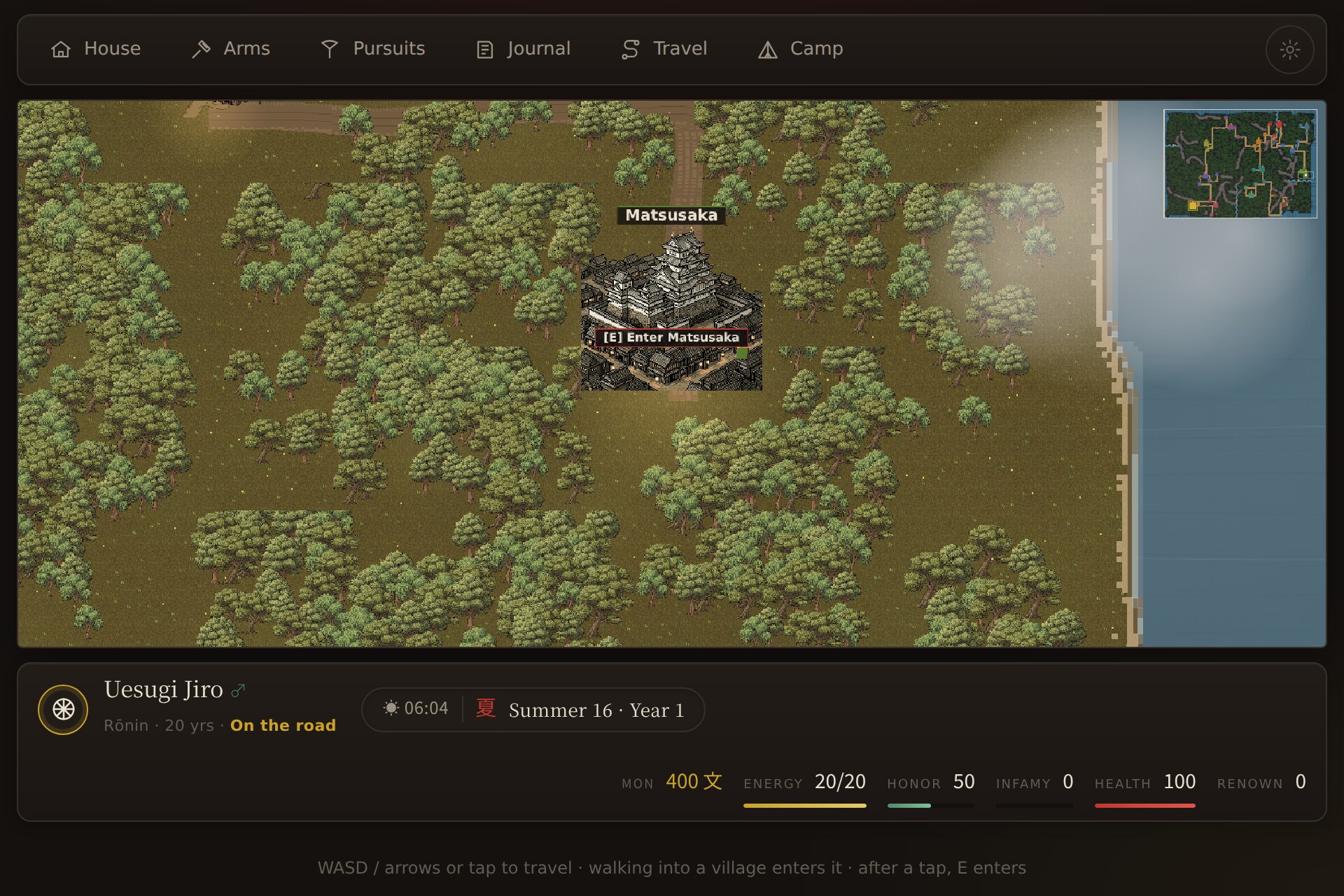
Leave any settlement and you're standing in open country: mountains, forest, rice paddies, reed marsh, meadow. A network of roads links every settlement to every other, bending around water and high ground and crossing rivers at bridges — but the roads aren't the only way through. Cut across open country if you'd rather, at your own risk.
The turning year
Seasons turning.
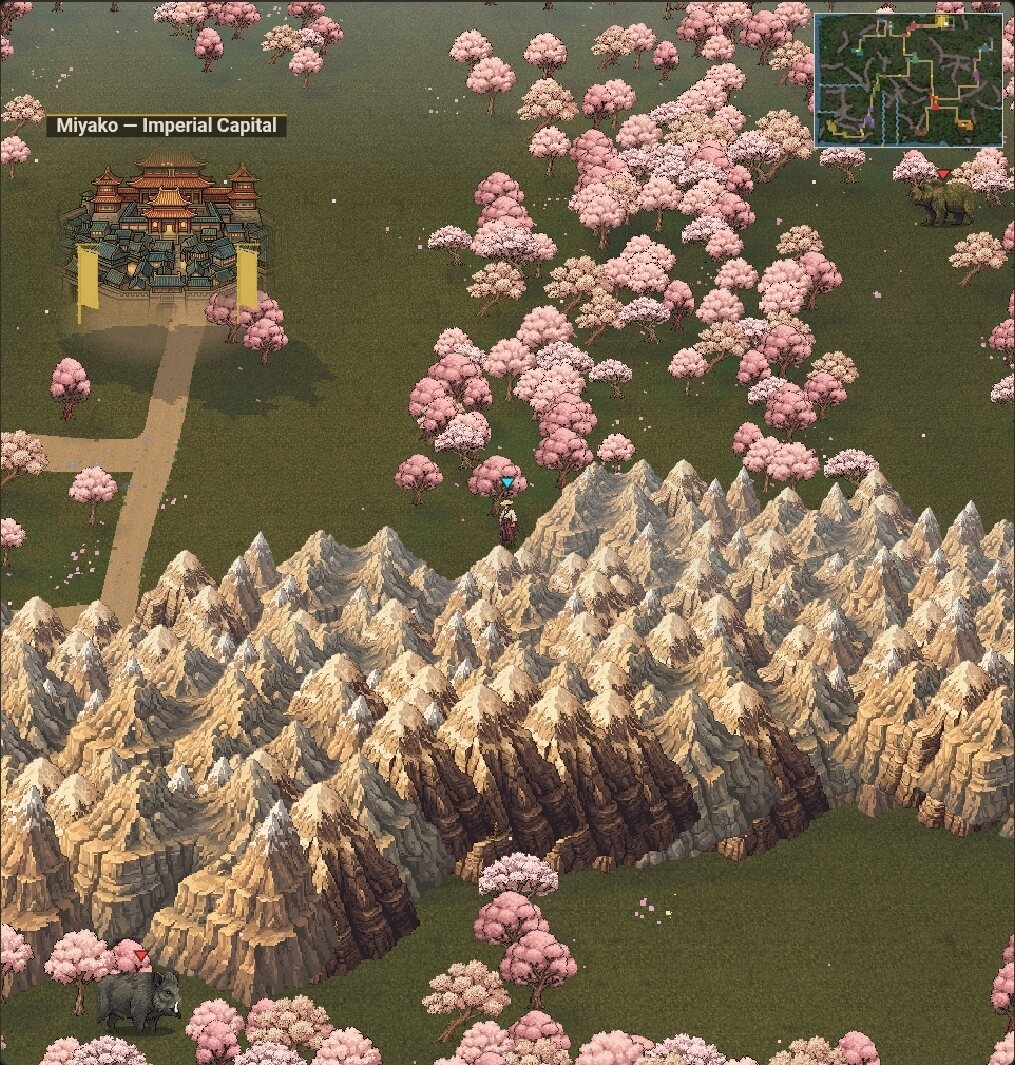
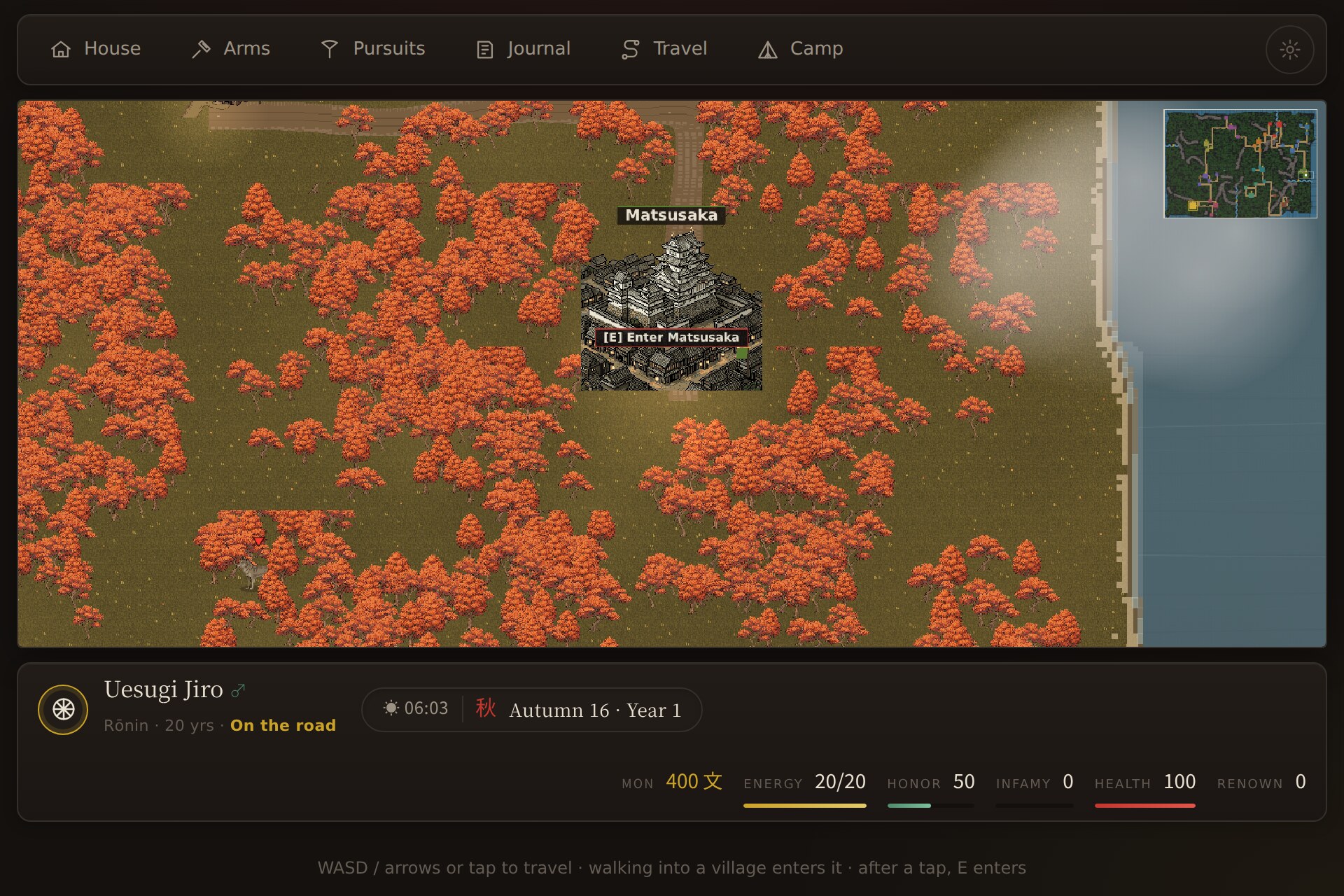
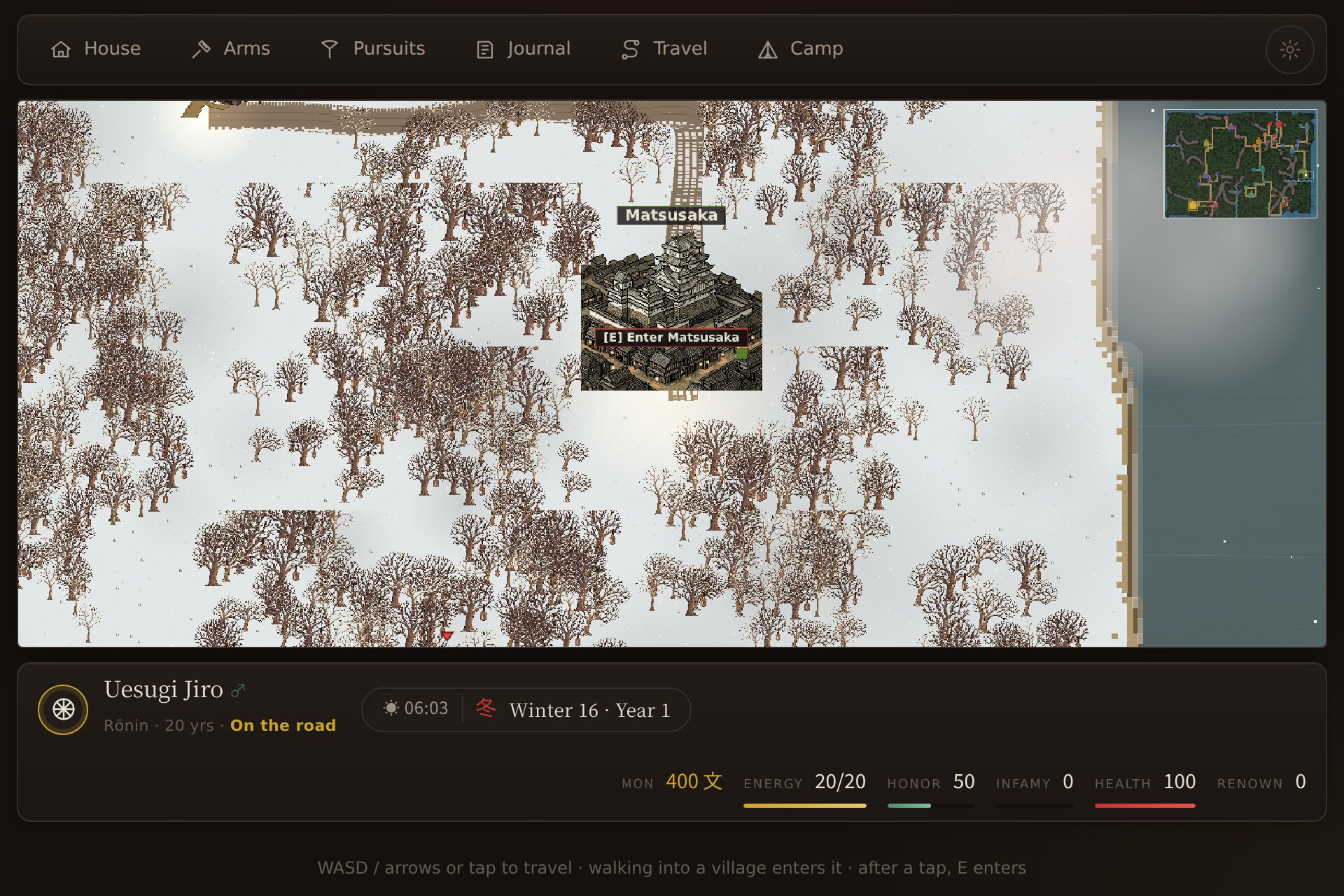
The calendar moves in real time as you play, and the land moves with it. Spring brings cherry blossoms drifting across the village; autumn turns the color of the trees; winter lays snow over roofs and roads. The turning seasons aren't just scenery — they're when the year's events happen, and part of what the road looks like when you're crossing it.
Settlements
From hamlet to capital.
Every settlement has its own character, scaled to what it is. A farming hamlet sits quiet at the edge of the paddies with little more than a store and a shrine. Post stations, market towns, and shrine towns each keep their own handful of buildings. Castle-towns are fortified seats — walls, gatehouses, a lord and his retinue. And at the center of it all stands the grand imperial capital, the largest map in the realm.
Farming hamlets
Small, quiet, close to the land — the humble end of the ladder every ronin starts near.
Towns & stations
Post towns, market towns, and shrine towns — each with the buildings its trade calls for.
Castle-towns
Fortified seats of a lord's authority, with the walls and garrisons to match.
The imperial capital
The grandest, densest map in the realm, where the emperor holds court — the top of the world you're climbing toward.
Interiors
Doors that open.
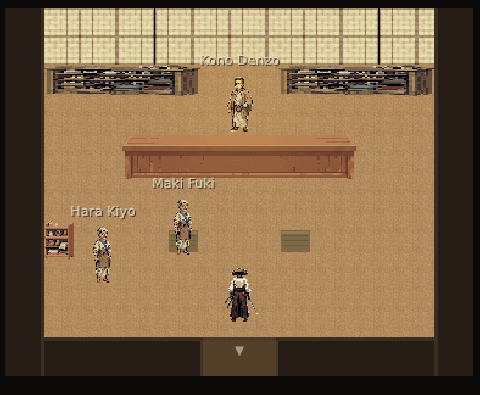
Buildings aren't backdrops — you can walk into them. Interiors are furnished and scaled to who lives there: a peasant's plain room, a lord's manor with space to receive guests, the capital's grander halls. Shops, homes, dojos, and shrines are real rooms with real people in them, not menus dressed up as buildings.
On the road
Who you'll meet out there.
The road itself has traffic on it. See who's traveling it — and what happens when you decide to stop them — on the quests page.